Selected bottles, tumblers, glass, acrylic, metal, packaging and promotional items.
UV DTF transfer decals
Detailed branding for suitable hard surfaces.
UV DTF is a transfer-decal branding process for compatible smooth rigid products. DTF Hub public pricing includes production of the UV DTF transfer and standard application to the client item, without a heat press.
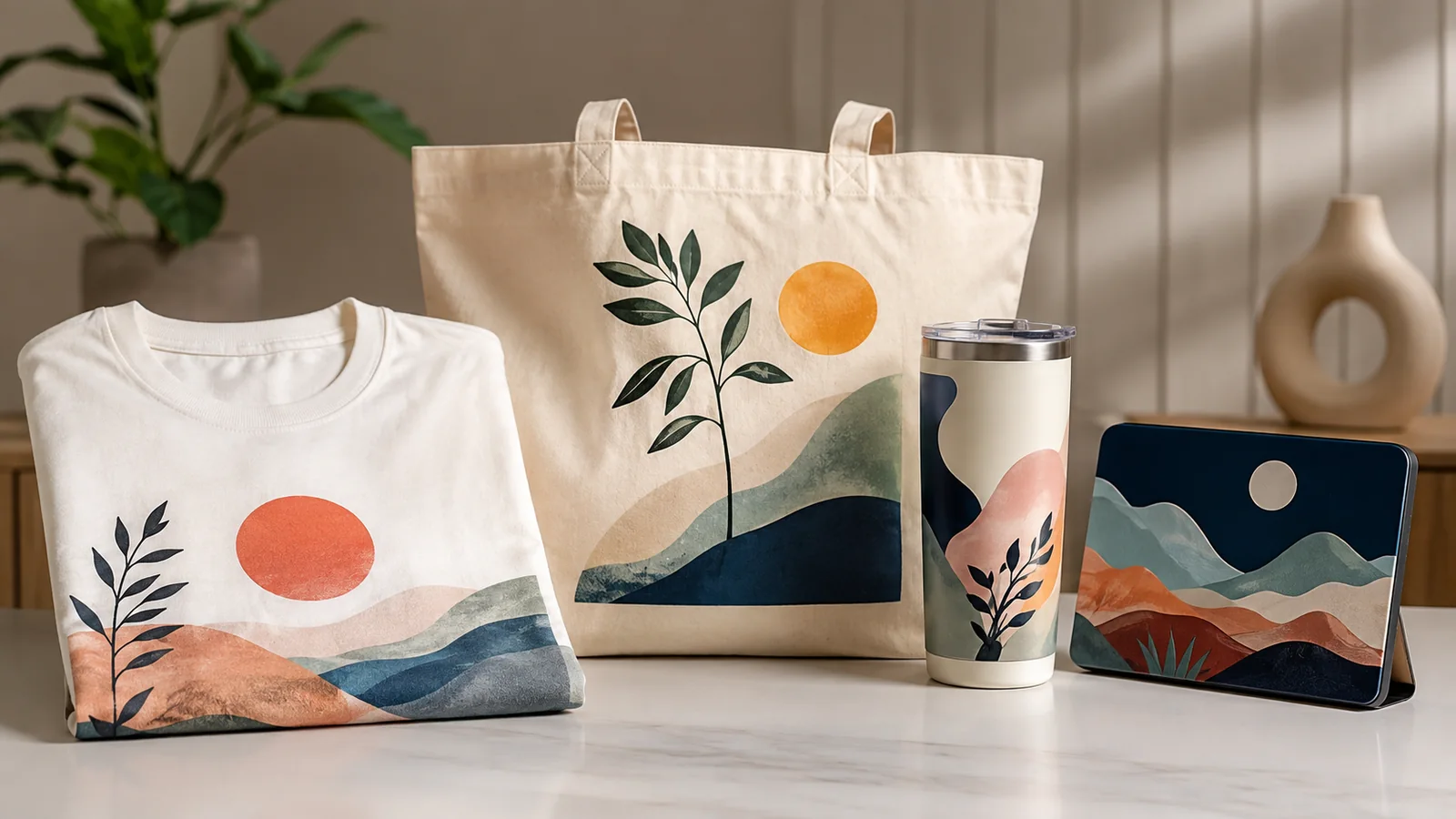
UV DTF transfers are applied to suitable prepared surfaces rather than pressed onto fabric. Standard application is included in the public branding price.
Adhesion can vary by coating, texture and material. Test unfamiliar substrates before a major run.
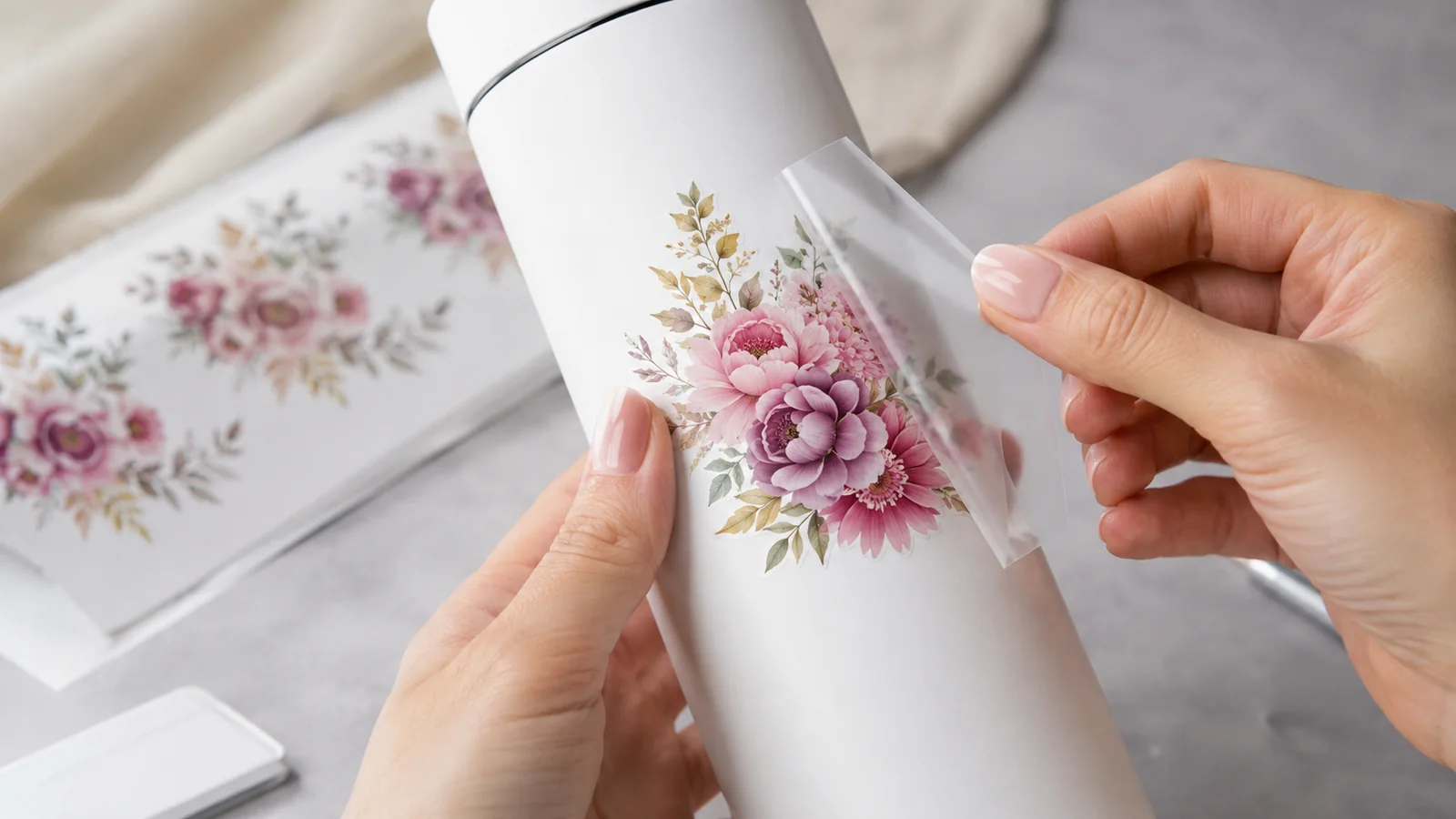
Typical applications
Use UV DTF when a transfer decal makes more sense than direct print.
The receiving product needs to be suitable for the transfer. The website estimate addresses the standard branding service—transfer production plus application—but does not guarantee that every material or coating will accept the decal. Unfamiliar substrates should be tested.
Bottles & tumblers
Brand compatible smooth drinkware with detailed full-colour artwork.
Acrylic & glass
Useful for selected signage, display and presentation surfaces where a transfer can be applied cleanly.
Boxes & gifting
Add branded detail to suitable coated or smooth packaging and presentation products.
Short-run product branding
Support selected custom products and prototypes without introducing a heat-press process.
UV DTF vs other hard-surface branding methods
The best method depends on shape, material, colour, quantity and the finish you want.
UV DTF is particularly useful for detailed full-colour branding on compatible hard objects that are awkward to print directly. It does not replace every direct-print, engraving or decal process.
| Method | Best fit | Where it is strong | Watch-outs |
|---|---|---|---|
| UV DTFDTF Hub core method | Detailed full-colour branding on compatible bottles, tumblers, glass, acrylic, metal and awkward shapes | No heat press; can reach curved or irregular objects that may be difficult to print directly; excellent for multicolour graphics and short/flexible runs | Adhesion depends on surface/coating; it remains an applied transfer layer and unfamiliar substrates should be tested |
| Cut / printed vinyl decals | Simple graphics, signage, removable labels and larger flat decal applications | Flexible, familiar, available in many specialty finishes and useful when removability is desirable | Cut vinyl requires weeding for intricate work; edges/film may be more apparent and very detailed multicolour artwork can be labour-intensive |
| Pad printing | Small repeat logos on pens, components and shaped promotional products | Established industrial process for compact marks on uneven objects and high-repeat jobs | Image area and colour count can be constrained; setup is less attractive for short-run photorealistic or frequently changing artwork |
| Screen printing on objects | High-volume simple logos on suitable cylindrical or flat products | Efficient at volume with bold spot-colour branding | Each colour adds setup; complex gradients and photographic artwork are less straightforward |
| Direct UV printing | Flat or machine-accessible products where the printer can reach the surface directly | Direct-to-object print with no transfer film; excellent colour and detail on suitable objects | Product geometry, handles, curves and print-head clearance can limit what can be printed directly |
| Laser engraving | Permanent premium marks on compatible metal, coated products, wood and selected materials | No ink layer; refined permanent appearance; excellent for premium tonal branding | Usually not a full-colour process and the final colour depends on the material/coating reaction |
| Sublimation | White/light polymer-coated mugs and sublimation-ready hard goods | Full colour with the image embedded into the receptive coating; good for wrap-style artwork on purpose-made blanks | Requires compatible sublimation-coated products and heat; not suitable for every client-supplied object |
When UV DTF is the practical choice
Choose UV DTF when you need detailed multicolour branding, the object is difficult to print directly, the run is relatively flexible, or the same artwork must be applied across several compatible hard-surface products. For permanent engraved marks, very large simple runs or purpose-made sublimation blanks, another method can be better.
UV DTF calculator
Estimate UV DTF branding from size and quantity.
Select UV DTF, enter the finished decal dimensions and number of items to brand, and the calculator will estimate the production requirement and complete standard branding amount.
Size-based branding estimateVAT inclusive
Examples:
Estimate based on the configured production width and 5 mm spacing. The calculator tests upright and rotated layouts automatically.
Estimated amount to pay
R0.00
—
Branding service—
Artwork serviceR0.00
Minimum billable length is 1 m. Thereafter the estimate rounds up to 0.1 m increments. Displayed prices include transfer production and standard application/branding to the client's item. Blank garments/products are not included unless separately quoted. Final production is subject to artwork and substrate approval.
20 m+ branding runs move to a trade review. The selected artwork service is still shown separately.
Artwork standard
Production starts with artwork that can scale cleanly.
DTF Hub requires vector artwork for standard production. A JPG or PNG can look acceptable on screen and still break down when enlarged, separated or repeated.
JPG / PNG is a reference, not the production master.
If this is the best file you have, choose the R350.00 redraw service.
SVG · EPS · AI · CDR · editable PDF
Vector artwork preserves clean geometry at the finished production size and gives repeat jobs a more reliable starting point.
UV DTF FAQ
Know the surface before you order.
UV DTF and textile DTF are different systems and should not be treated interchangeably.
Does UV DTF need a heat press?
No. UV DTF transfer decals are applied to suitable hard surfaces without heat pressing.
Can UV DTF be used on clothing?
No. Use Textile DTF for compatible fabric and apparel.
How much does UV DTF cost?
The standard online rate is R904.00 per production metre including VAT before applicable volume savings. This public rate includes transfer production and standard application to the client item; the blank product is excluded unless quoted separately.
What artwork is required?
Standard production requires SVG, EPS, AI, CDR or editable vector PDF artwork. Existing raster logos can be redrawn for R350.00.
UV DTF or vinyl decals?
UV DTF is usually more convenient for intricate full-colour graphics that would be time-consuming to cut and weed. Vinyl remains useful for simple graphics, large decals, specialty films and applications where removability is important.
UV DTF or direct UV printing?
Direct UV printing is excellent when the printer can access the object directly. UV DTF is useful when the product shape, curve, lip or geometry makes direct printing difficult or when the same artwork must be applied across several compatible objects.
UV DTF or laser engraving?
Choose UV DTF when full-colour brand artwork is important. Choose laser engraving when the brief calls for a permanent, premium, typically tonal mark on a laser-compatible material.
Should I test the surface?
Yes when the substrate, coating or intended use is unfamiliar. Adhesion can vary between materials and finishes.
UV DTF production
Start with the surface, size and quantity.
Then choose the correct artwork route and submit the job for production review.